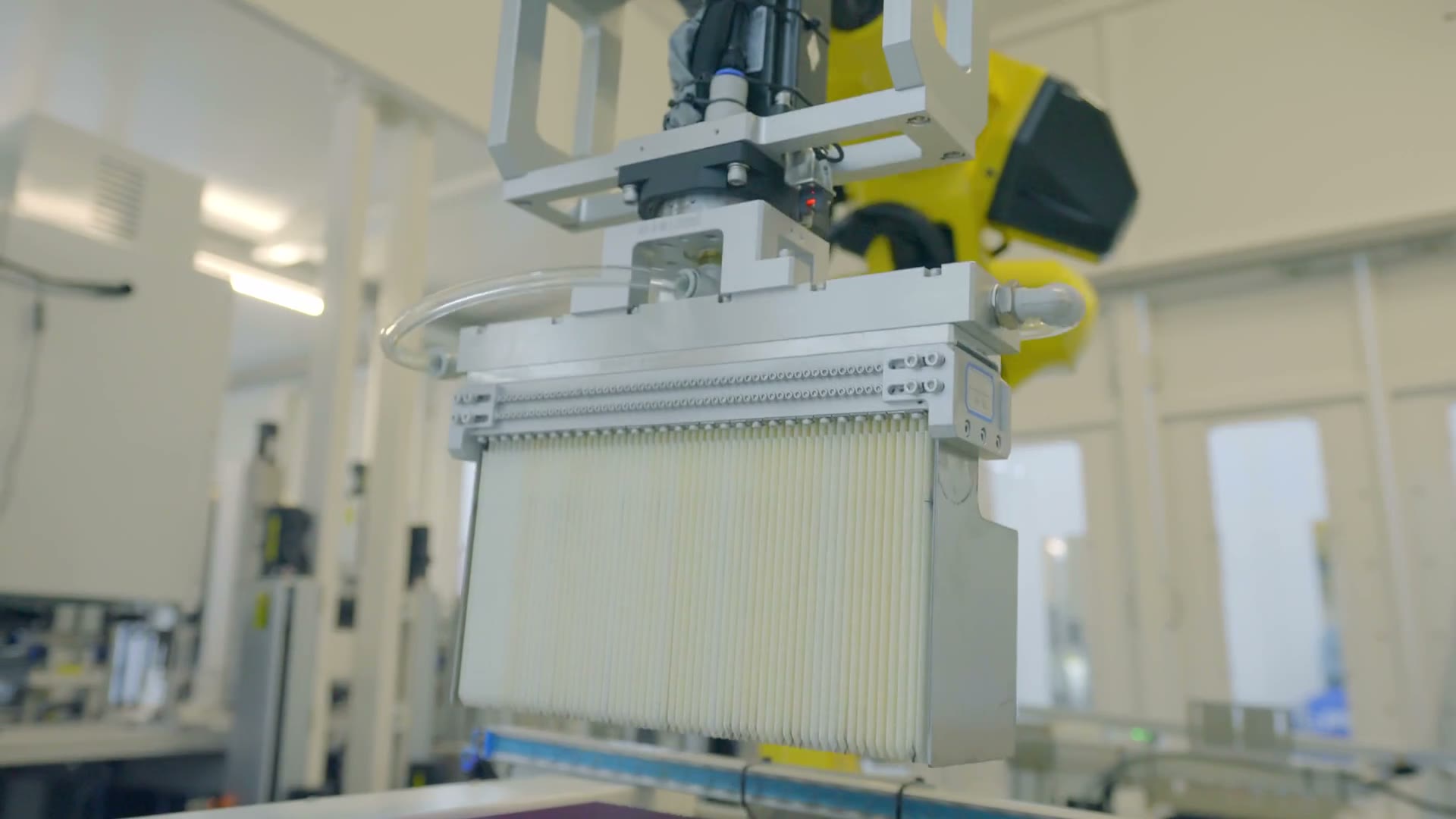
Qualify the use case
We test the decision, the available data, operating conditions, latency, and acceptance criteria before any hardware or model is selected.

Solutions · Technology solution
You have been shown what embedded intelligence can do. We help you establish what it must do here: the decision it changes, the data you already hold, the latency and connectivity it has to live with, the oversight it needs, and the acceptance criteria that separate a pilot from a system.
Who this is for
For the plant, quality, or maintenance owner asked to evaluate on-equipment intelligence, and for the sponsor deciding whether a pilot deserves a production budget.
We test the decision, the available data, operating conditions, latency, and acceptance criteria before any hardware or model is selected.
We define what runs on or beside the equipment and what runs upstream, based on response time, connectivity, and who must be able to inspect the result.
We plan how the output reaches production, quality, maintenance, or monitoring environments so that a result becomes an action rather than a dashboard.
We keep proof-of-concept assumptions distinct from production requirements, validation, ownership, and support so the gap between them is visible before it is funded.
Where we take a position
Before we scope anything, we want the sentence that says what result would make you deploy it and what result would make you stop. We also want to know who overrides the system and how that override is recorded. Where the data you hold cannot support the decision you want, we say so at the start rather than after the hardware arrives.
Useful inputs
You do not need all of it. Tell us what you know, and we will tell you which of the rest actually changes the answer.
Where this runs
It means some of the model processing happens close to the equipment instead of only in a central system. Whether that suits you depends on your data, the available hardware, response time, connectivity, validation, and how much human oversight the decision requires.
Yes. A discovery phase can define the use case, data inputs, system boundaries, acceptance criteria, pilot environment, and responsibilities before you commit to production. The point of that phase is to make a stop decision cheap.
Asked before the first call
Next step
This is usually an exploratory conversation before it is a purchase. Book a Meeting to test the use case against the data you already have; if the pilot environment and acceptance criteria are set, we can scope it commercially.
Book a Meeting · Connected operations · Manufacturing environments
Share the environment, location, approximate quantity or capacity, and timeframe. We’ll identify the missing inputs and confirm the next useful commercial step. Pricing is not instant or binding.
Requirement still taking shape? Book a Meeting instead — no finished specification needed.