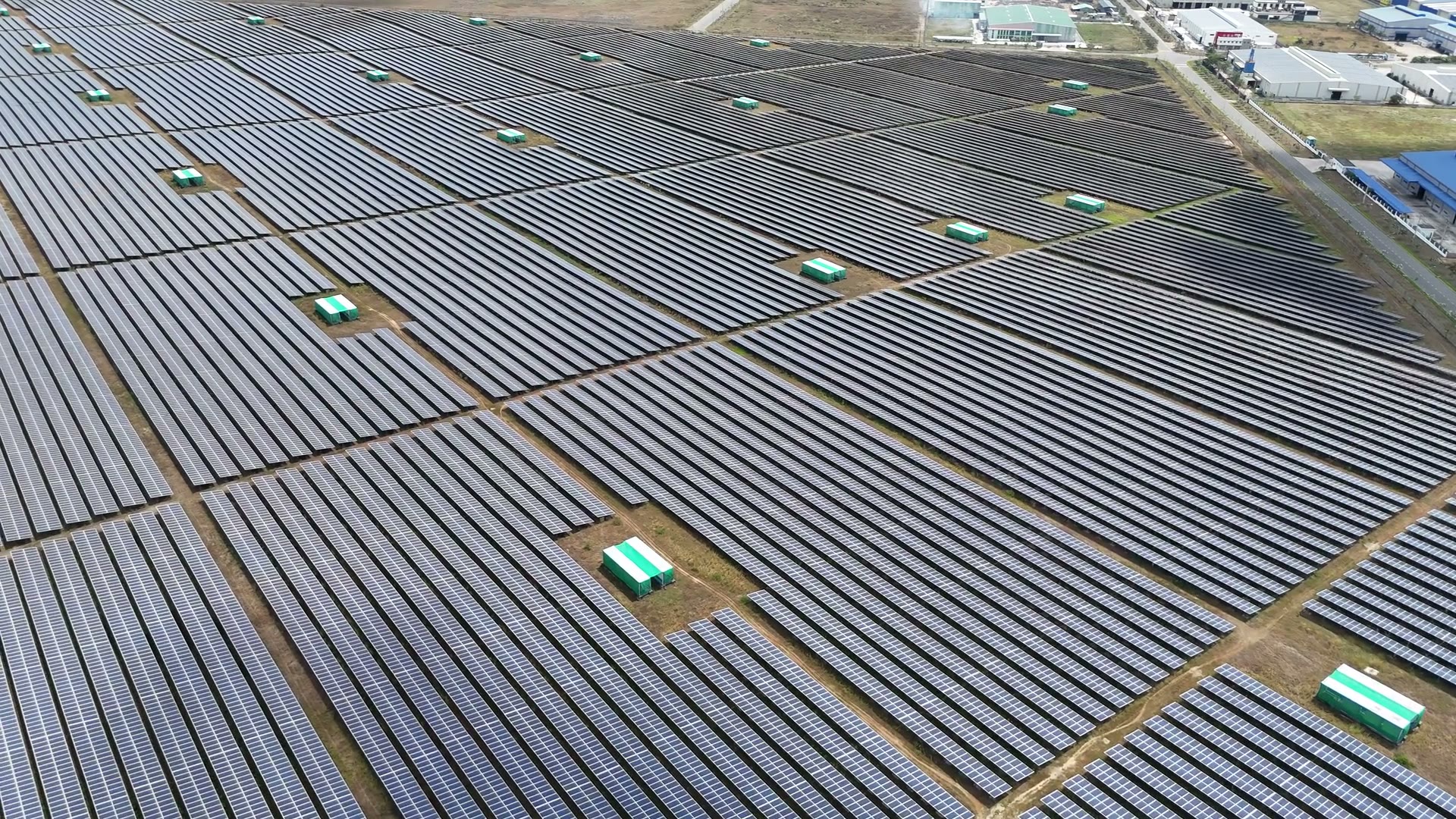
Visibility across distributed assets
We define what each remote or distributed asset must report, over which connectivity, and which system acts on it — before sensors are ordered.

Industries · Industry
We support energy and utility buyers with scoped technology and energy projects: connected assets across distributed sites, mobility for field teams, and generation or storage defined against the load it has to serve.
Written for
For operators of energy and industrial sites who need crews equipped in the field and power that holds at the site.
We define what each remote or distributed asset must report, over which connectivity, and which system acts on it — before sensors are ordered.
Field teams need devices, access, and workflows that suit the conditions they work in. Where collection or payment is part of the visit, terminal management (TMS) enters the scope with the handheld.
Renewable generation and storage are coordinated with controls, monitoring, and existing infrastructure, with the electrical interface owner named.
System limits, data handling, operational ownership, and project responsibilities are recorded while the scope is being written, not discovered at commissioning.
Decisions this environment opens
Which of these you actually need depends on the site, the workflow, the systems already in place, the energy objective, and the commercial scope you want covered.
What this usually runs on
Classes, not models. We confirm exact brands and models against current supplier documentation during quote review.
| Layer | Piece |
|---|---|
| Mobility | Rugged handhelds, or payment handhelds where the visit includes collection |
| Fleet software | Mobile device management (MDM), terminal management (TMS) where payments are taken, Insights |
| Power | Portable S Series for equipment-level backup, or site storage and generation when the load itself has to hold |
| Delivery | Mobility and site power, written as two workstreams in one proposal |
Where we take a position
A 1–2 kWh power station is sized for a terminal, a laptop, or a test set — runtime depends on the load you connect and how long you need it. It does not carry a site load, and treating it as if it does produces a proposal that fails on the first outage that matters. We size site storage from power and duration; we supply portable units where the job is genuinely portable.
Illustrative scenario
An illustrative project may connect distributed operational assets to an edge and cloud monitoring architecture while separately defining storage, controls, and commissioning requirements.
This scenario shows how capabilities may connect. It does not represent a completed customer project or a guaranteed outcome.
Yes. We coordinate technology and energy workstreams where their interfaces and responsibilities are defined during discovery and quote review, and we keep their acceptance separate so one does not block the other.
Asked before selection
Next step
If both halves are in play, the mobility and site power stack shows how we keep them as two workstreams in one proposal: rugged handhelds and mobile device management on one side, energy storage and S Series power stations on the other. Technical planning is where the load and duration are established before either half is priced. If only one half is defined, take that one into a quote review and leave the other open.
Mobility and site power together · Energy storage systems · S Series power stations
Share the environment, location, approximate quantity or capacity, and timeframe. We’ll identify the missing inputs and confirm the next useful commercial step. Pricing is not instant or binding.
Requirement still taking shape? Book a Meeting instead — no finished specification needed.